그간 저널리스트로 유명했기에, 큐레이터로서 발렌티노와 함께한 새 출발을 어느 누구보다 축하한다. 카타르 도하에서 열린 <포에버 발렌티노> 전시를 구성하는 12개의 방 중 ‘고고학’ 전시실에서 강조한 것은 무엇인가. 이 외에 11개의 방은 어떤 구성인가.
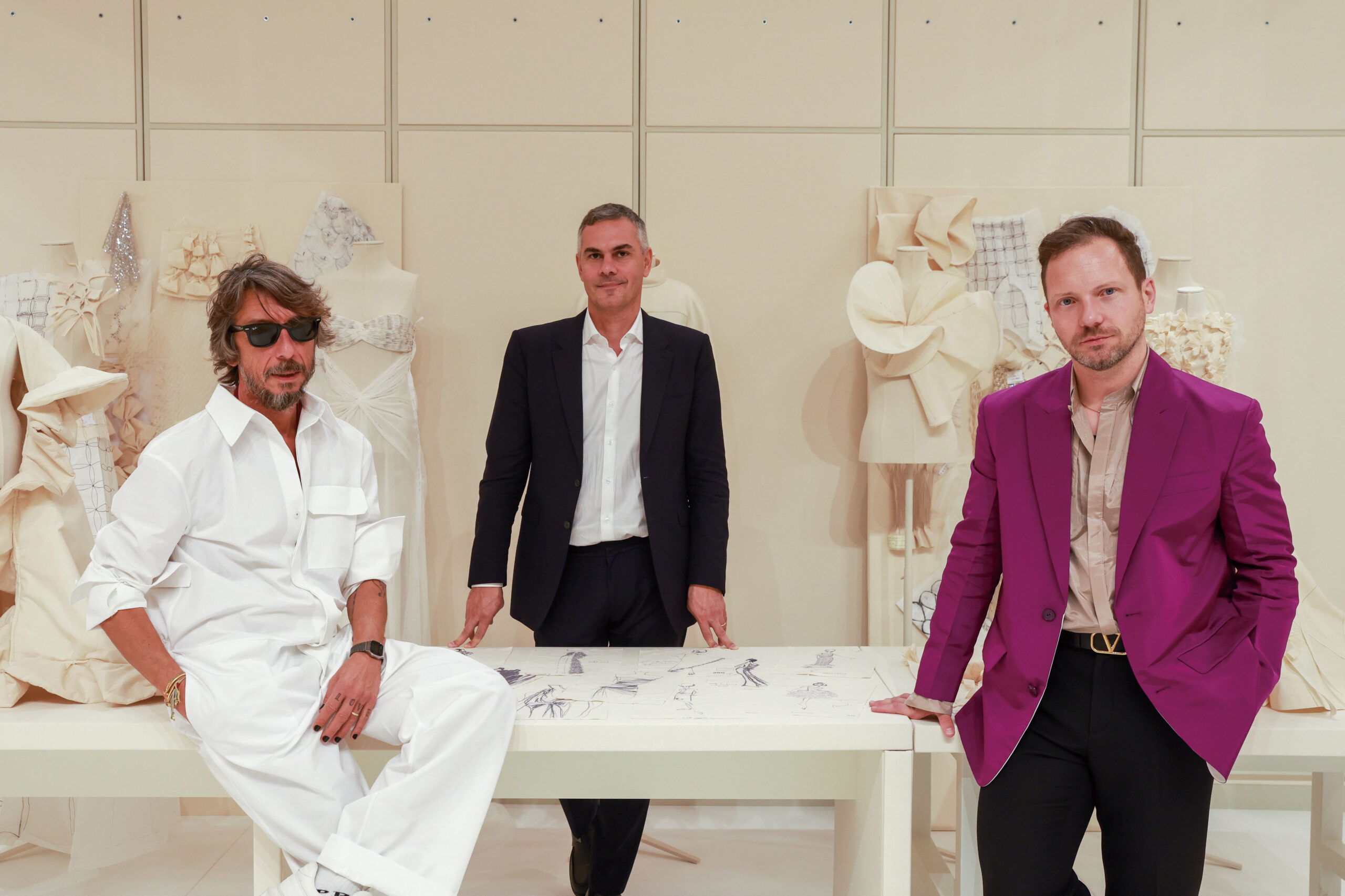
<포에버 발렌티노>는 발렌티노의 피엘파올로 피춀리, 나의 동료 큐레이터 마시밀리아노 지오니, 그리고 내가 머리를 맞대고 완성한 작품이다. 이 전시에는 우리가 저마다 ‘우리 것’, ‘우리 열정이 담긴 곳’이라 여기며 각별하게 느끼는 공간이 있을 것 같다. 나에게는 로마의 팔라초 미냐넬리에 있는 발렌티노 본사의 메종 발렌티노 아카이브를 재구성한 고고학archaeologies 전시실이 그렇다. 이 공간은 환상 속 아카이브를 확장된 버전으로 우아하게 재창조한 것이 특징이다. 그러면서도 옷을 옷장 같은 공간에 넣어두거나 서랍에 숨겨놓는 방식으로 아카이브가 원래 위치한 공간의 지리적 특성을 반영했다. 서랍은 사실 큐레이션을 어떻게 할까 고민하다 나온 해결책이다. 1971년 당시 사교계 인사였던 마리엘렌 드 로스칠드Marie-Hélène de Rothschild의 ‘프루스트 볼(마르셀 프루스트 탄생 100주년을 기념한 연회)’에서 오드리 헵번이 입었던 드레스를 (어떤 방법으로든, 꼭!) 보여주고 싶었는데 마네킹에 입히기에는 너무 섬세하고 약했다. 그래서 평평하게 펼쳐 전시하기로 한 것이, 패션 하우스의 헤리티지 부서에 흔히 있는 아카이브 서랍을 따라 하는 개념으로 발전했다. 동시에 이 전시 개념에는 연극성도 약간 가미되어 있다. 나는 서랍을 열어 근사한 무언가를 찾아내는 결말, 즉 ‘드러냄’의 개념이 좋다. 나에게 아카이브는 단순히 과거의 아이디어가 쌓인 먼지투성이 창고가 아니다. 아카이브는 모든 가능성과 예상 밖의 발견이 기다리고 있는 생동감 넘치는 공간이다. 사람들이 서랍을 열고 안에 들어 있는 전시품을 보면서, 내가 그런 것처럼 (지금도 그런 것처럼) 설렘을 느끼는 게 좋다. 또 공간에 들어서자마자 옷이 바로 보이지 않도록 공간 전체를 활용했다. 덕분에 공간을 지나는 과정은 발견의 연속으로 이루어진 여정이 된다. 그래서 전시 실 이름도 ‘고고학’이다. 땅을 파거나 이곳저곳을 샅샅이 뒤져 보물을 발굴하는 고고학 말이다. 전시의 나머지 부분까지 이야기하자면, 아카이브가 현실과 환상 사이를 오가는 것이 전시 전체를 관통하는 주제였다. 이번 전시의 또 다른 큐레이터, 마시밀리아노 지오니는 카프리치오capriccio라는 개념을 도입했다. 미술에서 카프리치오는 건축물, 유적지, 그 밖의 건축 요소를 허구적이고 환상적인 방식으로 결합하는 건축적 판타지를 의미했다. 그래서 전시실 간 카프리치오 요소들이 있다. 예를 들면 고대와 현대 로마의 자아, 고대와 산업화 시대가 대비한다는 의미로 콜로세움과 20세기 가스 탱크가 같이 있는 모습을 보여주는 공간을 구성하는가 하면, 그러면서도 전시 전체가 여러 공간과 분위기로 쉼 없이 이동한다. 메종 발렌티노의 외부와 내부, 아늑한 전시실과 화려한 전경, 새롭게 구상한 로마 풍경, 메종의 실제 공간을 정교하게 재현한 ‘팔라초’와 ‘아틀리에’ 전시 실, 현실을 환상으로 표현한 ‘시작’과 ‘고고학’ 전시실 사이를 오간다. 실제와 상상을 오가는 개념이 전시에 반복해 등장하며, 이는 패션과 깊이 연관되어 있다고 생각한다. 꿈과 현실이 어우러지고, 어쩌면 그 둘 사이 공간을 탐색하는 것이 바로 패션이니까.
‘Forever Valentino’ is really the brainchild of Pierpaolo Piccioli of Valentino, my fellow curator Massimiliano Gioni, and myself: and I feel like each of us had spaces that were ‘ours’, our passion, that we had a special resonance with, within the exhibition. For me, that space was the ARCHAEOLOGIES space, which is a re-imagining of the Maison Valentino archives held in their headquarters at the Palazzo Mignanelli in Rome. It’s kind of a sublime re-imagining – a heightened version, a fantasy archive. But nevertheless it does borrow its geography from archives around the world – the idea of clothes contained within wardrobe-like spaces, or concealed within drawers. The latter were actually a solution to a curatorial problem: I wanted (desperately!) to show the dress worn by Audrey Hepburn to the Rothschild’s Proust ball of 1971, but it was far too fragile to place on a mannequin. So we decided to exhibit it flat, which then evolved into the notion of replicating the archival drawers familiar to anyone who has visited the heritage department of a fashion house. There is an added slight sense of theatricality to this display notion – I like the idea of a denoument, a revelation, opening a drawing and finding something wonderful. For me, archives aren’t dusty repositories of past ideas: they are vibrant, alive spaces, full of possibilities and unexpected discoveries. I loved the idea of people opening drawers and being as excited as I was – and am – to discover what lies inside. We also used the space as a whole to evoke that notion – hiding outfits from immediate view, so it was constantly a voyage of discovery as you passed through the space. That’s why we called the space Archaeologies – the idea that you had to dig or hunt, to unearth treasures.
Speaking of the rest of the exhibition, the archive’s interplay of reality and fantasy was a theme throughout. Massimiliano introduced to the exhibition the concept of the capriccio – In art, a capriccio denoted an architectural fantasy, placing together buildings, archaeological ruins and other architectural elements in fictional and often fantastical combinations. So in the exhibition there are rooms that are capriccio – for instance, a room that collides the colosseum with a twentieth-century gasometer, like a contrast of Rome’s ancient and modern self, the classical and the industrial – but also the whole exhibition shifts constantly between different spaces, different moods. You move both outside and within the Maison Valentino, between intimate rooms and spectacular panoramas and reimagining of Roman landscapes, between rooms like A PALAZZO or DES ATELIERS which are precise recreations of actual spaces in the Maison, to fantasies like the room in BEGINNINGS or ARCHAEOLOGIES, which are fantasies of realities. This idea of shifting between the real the imaginary is a leitmotif of the exhibition – and it feels very relevant to fashion, which is all about the interplay of dreams and actuality and, perhaps, exploring the space between the two.

당신은 샤넬과 디올, 알라이아, 비비안 웨스트우드 등 여러 디자이너와 하우스의 업적을 기록하는 작업을 주로 해왔는데, 이번 전시에서는 처음으로 큐레이터로 참여했다. 주로 어떤 일에 집중했는지 알려달라. 이전에 하던 ‘기록’하는 일과는 구체적으로 무엇이 달랐는지도 궁금하다.
전시를 여는 것은 책을 만드는 것과 정말 다르다. 이 전시는, 예를 들어 패션 화보나 쇼 이미지, 영상보다는 의상의 실물을 보여주는 데 초점을 맞춰야 한다는 생각이 강했다. 영상이나 이미지는 분명 옷이 현실에서 움직이는 모습을 연상시키지만, 이런 의상이 오브제로서 선사하는 아름다움과 마법은 항상 내 마음을 사로잡는 것이었다. 그리고 나의 이전 작업은 그 특성상 시간순으로 구성되어 있다. 예를 들어 애슐린에서 출간한 <샤넬: 더 임파서블 컬렉션>은 인쇄물 형태의 전시라 부를 수 있는 책으로, 샤넬의 역사와 상징을 나타내는 핵심적인 예시 100가지를 시간 순서대로 보여준다. <비비안 웨스트우드: 더 컴플릿 컬렉션(캣워크)>, <디올: 더 컴플릿 컬렉션(캣워크)>에서는 컬렉션의 흐름에 따라 각 하우스의 헤리티지를 전개했다. 하지만 이 전시명 <포에버 발렌티노>는 정서적으로 울림을 준다. 피춀리는 전시를 준비하면서 이런 점을 중요하게 생각했다. 우리가 ‘회고’라는 단어를 지양하는 이유는, 그 단어에는 단순히 뒤를 돌아본다는 개념이 담겨 있기 때문이다. 그 대신 ‘관점’을 내세우는 것은 이 전시가 과거를 예찬하고, 현재를 중시하고 탐구하며, 미래를 예측할 수도 있다는 걸 말하고 싶었다. 또 발렌티노를 다양한 시선으로 관찰하고, 메종의 헤리티지와 정체성을 각기 다른 관점에서 바라보기 위한 초대이기도 하다. 물론 전시는 완전함의 측면에서 출판물과 다르다. 전시는 환경과 경험을 만들고 사람들을 공간으로 초대한다. 이 점이 특별하고 예외적이며 굉장히 가치 있다. 내가 책의 물리적 특성과 촉감(표지의 질감, 각 페이지의 무게와 감촉)에 늘 관심을 두는 것처럼 전시에서도 물리적 특성이 필수적이다.
Creating an exhibition is very different to creating a book. I felt very, very strongly that this exhibition should hinge around the display of physical garments, rather than, for instance, imagery or film of fashion shoots or shows. Those evoke the garments in motion, certainly – in life – but the beauty and magic of pieces such as these as objects was something that always arrested me. Also my previous works have often been chronological by their nature – in the Assouline title Chanel: The Impossible Collection, for instance, which we always described as an exhibition in print, runs through 100 key examples of Chanel’s history and iconography but in strict chronological order; the Westwood and Dior catwalk books draw you through the life of each house in the rhythm of their collections. Instead, I feel ‘Forever Valentino’ resonates on an emotional level – which was one of the primary aims Pierpaolo had for the exhibition. We even shied away from calling it a retrospective, because that implies within its very name the notion of purely looking backwards. Rather we talked about a ‘perspective’, because the exhibition celebrates the past, values and explores the present and perhaps even predicts the future. It also invites different observations of Valentino, different points of view on its heritage and identity. And of course, an exhibition is different to a publication in its thoroughness – it is about creating an environment, an experience, and inviting individuals into a space. That is something special and exceptional, incredibly valuable. The same way that I am always interested in the physicality and tactility of a book – the texture of the cover, the weight and feel of the pages – the physically of the exhibition is vital.

200점 이상의 발렌티노 아카이브를 한데 모으기란 쉽지 않을 거라 생각한다. 50년 넘게 지속되고 있는 역사적인 쿠튀르 의상을 실제로 다루며 발렌티노에 대해 새로이 깨달은 것이 있다면.
내가 가장 흥미롭게 여기는 부분은 영원함timelessness이었던 것 같다. 피춀리는 패션을 시간의 제약으로부터 벗어나게 해 보편성을 부여한다는 개념을 아주 좋아했고, 2022년 봄·여름 컬렉션 쇼를 위해 해 오던 작업이기도 했다. 그는 아카이브 제품을 정밀하게 재해석해 새로운 삶을 부여하고, 새로운 디자인과 조화를 이루도록 해 선보였다. 아카이브를 재해석해 선보이는 것은 한편으로는 우리가 살고 있는 현재를 잘 드러내는 작업이라고 생각한다. 그러나 영원함으로 돌아가자면, 드레스를 설치하면서 미학적 관점에서 여러 시대와 옷의 관계성을 강조하는 아주 정밀한 분류 작업을 했다. 그러자 시대라는 개념이 사라졌다. 지안카를로 지암메티Giancarlo Giammetti가 전시장을 방문했을 때 이 부분을 가장 먼저 언급하기도 했다. 발렌티노 가라바니와 피춀리의 디자인에는 모두 영원하고 시간이 지나도 변하지 않는 아름다움에 대한 관념이 담겨 있기 때문이다. 이는 전시 제목인 <포에버 발렌티노>와도 직접적으로 닿아 있다. 이 전시가 옷 한 벌, 전시실 하나로 축소되는 것은 정말 싫을 것 같다. 발렌티노의 힘은 특정한 앙상블, 시대, 장식적 장치, 이미지에 있지 않다. 나에게 발렌티노는 정서적 울림이다. 시그너처 컬러인 레드는 열정과 사랑의 색채로서 감성을 자극한다. 발렌티노 가라바니 본인도 학창 시절 바르셀로나에서 본 오페라 속 붉은 옷을 입은 여인에게 감동을 받았다고 한다. 그가 붉은색을 보고 느낀 반응은 감정에서 비롯된 것이다. 내가 생각하는 메종 발렌티노에는 눈물이 많다. 지극히 이탈리아적인 데다 감정과 열정, 사랑이 충만하다. 물론 내가 가장 좋아하는 의상도 있고, 메종 발렌티노에서뿐 아니라 더 넓은 문화적 관점에서도 역사적 의의가 있어 아주 특별한 앙상블도 전시되어 있다. 하지만 어떤 하나의 의상이 더 중요하고, 특별하고, 더 핵심적이라고 언급함으로써 발렌티노의 이야기를 축소하지는 않을 것이다. 이 전시는 교향곡을 연주하는 오케스트라와 같아서, 메시지를 제대로 표현하기 위해서는 모든 요소와 작품이 필요하다.
Possibly one of the things that interested me most was the notion of timelessness. Pierpaolo was fascinated by this idea – of removing fashion from the constraints of its time, giving it a universality. It’s something he has done with his shows – for his Spring/Summer 2022 collection, he precisely recreated archival pieces, to give them a new life, and mixed them in with his new designs. It is something that I feel is very much of our time, with archival re-editions. But to return to the idea of timelessness: when the dresses were installed, they were placed in aesthetic conversation, quite precise groupings that underscored the relationships between clothes of different eras – and then the notion of time periods melted away. It was actually the first thing that Giancarlo Giammetti commented on, when he visited the exhibition, because there is an eternal and timeless idea of beauty in the house’s work, under both Valentino Garavani and Pierpaolo. And it keyed directly with the exhibition’s title – Forever Valentino.
I think I would actually hate for the exhibition to be reduced to a single outfit, or even a single room. The power of Valentino is that it isn’t so much about a particular ensemble, or era, or decorative device, or image. Valentino for me is about emotional resonance – its signature colour, red, is evocative because it’s emotional – a colour of passion, of love. Valentino Garavani himself had an emotional epiphany when he saw a woman wearing red, when he was a student at the opera in Barcelona – his reaction to that colour was emotional. There are a lot of tears at Valentino! It’s incredibly Italian, full of feeling and passion and indeed love. Although I undoubtedly have favorite outfits – and certain ensembles within the exhibition are incredibly special, because of their historical significance either within the Maison, or in wider culture – I would never like to reduce the story by citing just one are more significant, or more special, or more vital. In truth, it’s like an orchestra playing a symphony – you need every piece, every component, in order to truly express the idea.

마지막 질문이다. 고고학은 과거로 현재를 읽고, 미래를 예견할 수 있어 그 의미가 특별하다. 당신은 패션 분야의 고고학자 중 가장 뛰어난 사람 중 하나다. 수년간 당신이 몰두해 온, 그리고 미래를 위해 현재에도 기록 중인 패션은 당신에게 어떤 의미이자 존재인가.
패션의 중심은 사람, 삶이라고 생각한다. 최고의 패션을 보면, 어떤 면에서든, 심지어 솔기에라도 시대상이 반영되어 있다. 제아무리 환상적인 패션이라도 기저에는 인간성, 우리의 현실, 우리의 꿈이 담겨 있다. 그것이 내가 패션에 매료되고 울림을 느끼는 이유다. 그리고 그것이 내 작업을 통해 표현하고자 하는 바이기도 하다.
I think fashion is about people. It’s about life. The best fashion has, in some way, a reflection of its times sewn into its seams. Even at its most fantastical, fashion is about humanity – about our realities and our dreams. I think that’s why it fascinates me, why it resonates with me. And its what I hope to express through my work.
Text Oh Yura
Art Lee Jaedong
더 많은 화보와 기사는 <데이즈드> 1월호에서 만나볼 수 있습니다. Check out more of our editorials and articles in DAZED KOREA January print issue.